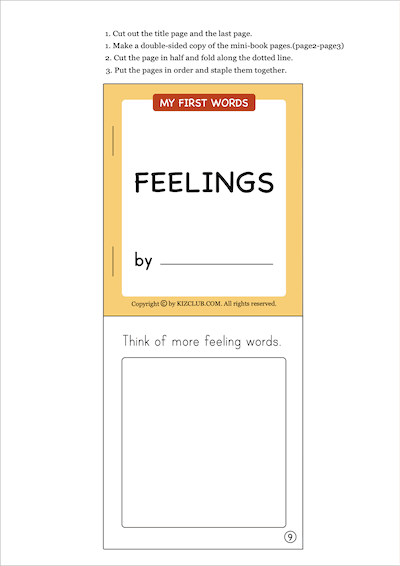
CONTENT UNIT 1
UNIT 1.B.
Theory.
🧠 Why Teaching Feelings Matters in Early Childhood Education
- 🎵 Use Songs and Movement ( “If You’re Happy and You Know It”/ Simon says...)
- 🎨 Creative Expression
- 📚 Read Stories About Feelings.
- Emotional Tools . ACTIVITY: Create your own Feeling Thermometer.
Hello everyone! How are you today? How do you feel?
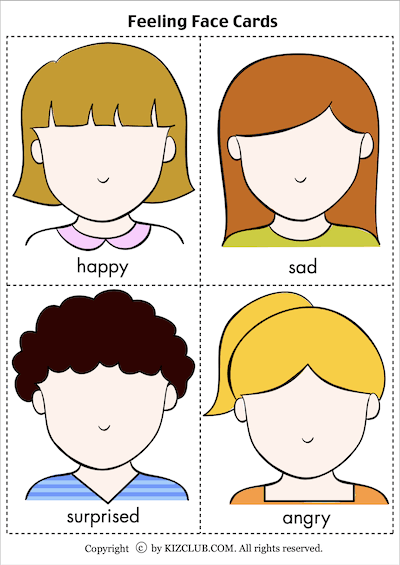
happy 😊 sad 😢 angry 😠 scared 😨 tired 😴 surprised 😮
a mix of them

How do they feel?
a 
b 
c 
d 
e 
f 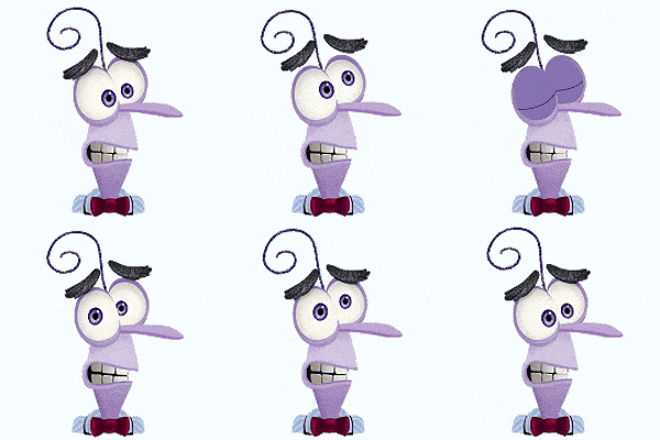
g 
h 
🧠 Why Teaching Feelings Matters in Early Childhood Education
1. 🌈 Emotional Literacy Is the Foundation for Learning
Before children can learn reading, math, or any other academic skill, they need to understand and manage their feelings.
When children can identify how they feel (“I’m sad,” “I’m angry,” “I’m excited”), they are better able to:
-
Communicate their needs instead of acting out. Si están enfadados lo expresan en vez de darle un berrinche o pataleo😅
Build empathy. They start to understand how others feel. Recognize and respect other people’s feelings. This is part of Social and Emotional Learning (SEL) ❤️ , a key area in early education frameworks around the world.
-
Develop self-regulation (managing big emotions calmly). Children who can talk about feelings learn early that all emotions are okay: it’s what we do with them that matters.
-
Feel secure and ready to learn.
🎨 How to Teach Feelings in Early Childhood
There are many creative and play-based ways to help children learn about emotions.
Here are 4 effective strategies for early childhood educators:
🎵 1. Use Songs and Movement (like “If You’re Happy and You Know It”/ Simon says...)
EXAMPLE. 🎵 Listen to the song “If You’re Happy and You Know It.”
The song “If You’re Happy and You Know It” is one of the best teaching tools for young English learners — not just for emotions, but also for body parts, actions, verbs, and classroom interaction.
Here’s how you can use it in a multifunctional, educational way ⬇️
🌈 1. Start with Emotions (Feelings)
This is the core of the song, students learn to name and act out how they feel.
Example verses:
-
If you’re happy and you know it, clap your hands 👏👏
-
If you’re sad and you know it, say “oh no!” 😢
-
If you’re angry and you know it, stomp your feet 😠👣
-
If you’re tired and you know it, take a nap 😴
-
If you’re scared and you know it, hide your face 😨🙈
💪 2. Add Actions (Verbs & Commands)
Each line in the song uses an imperative verb (“clap,” “stomp,” “say,” “nod”).
This naturally introduces action words and helps learners follow commands in English.
Examples:
-
clap your hands 👏
-
stomp your feet 👣
-
shout hooray! 🙌
-
turn around 🔄
-
jump up high! 🦘
-
nod your head 👍
🗣️ Language focus:
“Clap,” “stomp,” “jump,” “turn,” “nod,” “wave” are all verbs in the imperative form, useful for TPR (Total Physical Response).
3. Teach Body Parts
Since the song uses movement, you can adapt it to include body vocabulary:
Example verses:
If you’re happy and you know it, touch your nose👃/ ears👂!
-
If you’re happy and you know it, pat your head! 🧠
-
If you’re happy and you know it, shake your hands! 🤲
-
If you’re happy and you know it, wiggle your toes! 🦶
-
If you’re happy and you know it, turn around! 🔄
🗂️ 4. Combine All Elements
Once students know emotions, actions, and body parts, you can mix them creatively.
🎨 5. Extension Activities
Let kids invent one!
“If you’re silly and you know it, wiggle your nose!”
🪄 Activity Idea:
After the song, play “Teacher says” (like Simon Says):
“Clap your hands!” “Touch your nose!” “Jump up high!”
🎨 2. Creative Expression:
- Play / Games
👉 Students act out: “Show me your happy face!” / " Give me your happy/ sad... face!"

EXAMPLE. Use Mirrors and Facial Expressions. 🪞Give children a mirror and have them make different faces: happy, sad, angry, scared.
Ask:
“What does your face do when you’re happy?”
“What happens to your mouth when you’re sad?”
This builds self-awareness and emotional vocabulary through fun observation.
- Art. Let children paint “what happiness looks like,” "Paint your own Colour Monster using different emotions".


- Science Corner: Mix colored water to “create new feelings.”


📚 3. Read Stories About Feelings. Picture books are powerful tools to start discussions ( ex. The Colour Monster by Anna LLena)
EXAMPLE. The Colour Monster provides a visual, sensory, and symbolic way for kids to identify feelings, which makes abstract emotions concrete.
Step 1: Read or Watch
Read the story aloud with expression (or show a video version).
Pause between pages to ask guiding questions, as you would with children.
Example questions:
-
“What color is happiness?”
-
“How does blue feel?”
-
“Have you ever felt mixed-up like the Colour Monster?”
| Color | Emotion | Possible Associations |
|---|---|---|
| Yellow | Happiness | Sunshine, joy, laughter |
| Blue | Sadness | Rain, quiet, tears |
| Red | Anger | Fire, frustration |
| Black | Fear | Darkness, hiding |
| Green | Calmness | Nature, balance, peace |
| Pink | Love | Warmth, caring |
Step 3: Teaching Strategy Workshop. Now, move from “learning about the book” to “learning how to teach with the book.”
Puppet Story
The “Colour Monster Jars” activity.


Objective: Help children identify and sort emotions.
Materials:
-
Clear jars or cups (plastic)
-
Coloured paper or tissue (yellow, blue, red, green, black, pink)
-
Labels with emotion words
How to do it with children:
-
After reading the book, say:
“Let’s help the Colour Monster sort his feelings into jars!”
-
Ask children to choose a colour that matches how they feel today.
-
They place the coloured paper in the matching jar.
-
End with a group reflection: “What colour are you today?”

4. Emotional Tools
Use cards with pictures of different feelings.
Children can point to how they feel during circle time or transitions. You can create a Feelings Corner in the classroom where children choose or move their face to match their emotion that day.
During Circle Time you can use a "Feelings Wheel", kids choose how they are feeling face


ACTIVITY.🌡️ The “My Feelings Thermometer.
This is a visual self-regulation tool that helps children measure and manage the intensity of their emotions.
🔍 How it works:
Draw or print a thermometer divided into 4–5 color zones, for example:
| Level | Color | Feeling | What to Do |
|---|---|---|---|
| 5 | 🔴 Red | Angry / Out of Control | Take deep breaths, quiet space |
| 4 | 🟠 Orange | Frustrated / Upset | Talk to a teacher, hug a toy |
| 3 | 💛 Yellow | Nervous / Worried | Count to 10, ask for help |
| 2 | 💚 Green | Calm / Happy | Keep playing, share with friends |
| 1 | 💙 Blue | Sad / Tired | Rest, listen to music, hug a friend |
Original examples from the internet:


Children move their clip, magnet, or picture to show how they feel.
This helps them:
-
Recognize their feelings’ intensity.
-
Communicate with adults before emotions escalate.
-
Choose calming strategies.
🧩 Educator Tip:
Use it during daily check-ins:
“Let’s look at our feelings thermometer! Where are you today?”
“If you’re on red, what can help you move down to yellow or green?”
This also encourages emotional self-regulation and reflection.
You can do it during circle time, and talk about how they feel:


OTHER ACTIVITIES AND RESOURCES: